
Welcome to the
Legacy of Healing Global Resource Hub

Here, you'll find a structured space designed to help individuals and families better understand emotional experiences, recognize relational patterns, and take practical next steps toward healing.
This Resource Hub brings together evidence-informed guidance, educational resources, and practical tools designed to support healthier thinking, emotional resilience, and meaningful change.
Whether you're seeking personal insight, supporting someone you care about, or looking for dependable information that aligns with your values, this Hub offers a trustworthy place to begin.
Each resource is designed to help you move forward with greater clarity, confidence, and steadiness—one step at a time.
Reliable information for steady, practical growth.
Clear, supportive guidance designed to help you find direction without overwhelm.
This Resource Hub focuses on education, understanding patterns of harm, and prevention. Supporting individuals and families before crisis or legal intervention becomes necessary.
Everything centered. Everything simple. Everything steady.
GUIDING PERSPECTIVE
“When past wounds go unaddressed, their impact continues forward.”
—Dr. Rose, ND
Finding Your Starting Point
You don’t need to take in everything at once. There’s no “right” place to begin.
This section is here to help you pause, orient yourself, and gently notice where support may be most helpful right now, based on what you’re experiencing and what feels manageable to explore.
There’s no pressure to decide anything today. This is simply a way to bring a little clarity to where you are and to move forward at a pace that feels steady and safe.
A Few Questions to Help You Orient
Answer a few simple questions to help you find the right place to begin. Based on your responses, we'll guide you toward resources that fit your current needs.
Your responses aren’t used to diagnose, label, or rush you forward. They’re simply a way to point you toward supportive starting places within the Hub.
.
What You Might Be Looking For
You may be exploring support for things like:
• understanding emotional or relational patterns
• strengthening daily routines and stability
• supporting a child or teen
• survivor-focused insight and guidance
• preparing for deeper personal change
You don’t need to know exactly what fits; noticing what resonates is enough.
How You’re Approaching This
You’ll also have the option to reflect on the role you’re coming from, whether as a survivor, caregiver, educator, professional, or supporter, and how ready you feel to engage right now.
Some people feel ready to learn and apply new tools.
Others prefer a gentle starting point.
Many are simply exploring and getting oriented.
All of these are valid places to be.
Moving Forward
You’re welcome to explore freely without sharing any personal information.
If you’d like optional suggestions or resources sent to you, you can choose to share your email, but there’s no requirement, expectation, or obligation to continue.
This process exists to support clarity, not pressure.
.
.
.
About This Hub
Navigating Your Next Steps With Clarity

The Legacy of Healing Resource Hub was created as a stable, supportive starting point for individuals and families seeking practical direction.
It brings together grounded, evidence-informed guidance to help you understand your experiences, recognize emotional and relational patterns, and move forward with greater assurance.
By supporting early understanding, this Hub helps individuals and families navigate challenges before they become more difficult to manage.
This space is here to steady you as you explore:
• what you’re feeling
• what you’re facing
• and what supportive next steps can look like
Our focus is simple: to help you begin with understanding, so the path ahead feels more manageable and less overwhelming.
What We Offer
Clarity as a Starting Point

Legacy of Healing Global offers practical, trauma-informed resources designed to support everyday healing.
By supporting clarity and steady understanding early, these resources help reduce the likelihood that challenges escalate over time.
Whether through books, guided tools, or structured educational materials, each resource is created to help survivors, families, educators, and professionals build emotional steadiness at a pace that feels safe.
Here, you’ll find:
• easy-to-use strategies for daily stability
• tools for healthier communication and connection
• resources that support emotional and relational understanding
• structured guidance you can apply right away
Every offering is built to help you move gradually from insight to action. There is no pressure, judgment, or urgency.
The Seed & The Sower
Every legacy begins with a seed. Every seed needs a sower.
At Legacy of Healing Global, our resources are organized into two connected collections because lasting healing is cultivated across generations.
The Seed Collection
The Seed Collection is written for children and teens.
Like seeds planted early in life, these books nurture emotional awareness, healthy boundaries, resilience, courage, and hope before harmful patterns become deeply rooted. They are designed to help young readers grow with truth, confidence, and the understanding that healing can begin early.
The Sower Collection
The Sower Collection is written for adults.
Whether you are a parent, caregiver, educator, counselor, advocate, survivor, or someone simply seeking your own healing, every choice you make plants something for tomorrow.
These resources help you sow into the lives of others by providing practical tools, wisdom, and trauma-informed guidance that create healthier families, classrooms, relationships, and communities.
They also help you sow into your own future. Every insight understood, every healthier decision practiced, and every pattern transformed becomes a seed for the life you are still creating. Healing is not only something we give to others. It is something we continually cultivate within ourselves.
The Sower Collection exists to help adults become intentional gardeners of both the next generation and their own future.
Together
The Seed Collection prepares the next generation.
The Sower Collection equips those who plant, nurture, and continue growing.
Together, they reflect the mission of Legacy of Healing Global:
Plant healing early. Cultivate healing daily. Leave a legacy that continues to grow.
Explore the Legacy Approach

Healing deepens when insight becomes practice.
The Legacy Approach provides a structured, calm rhythm for applying what you learn in steady, meaningful ways.
By supporting steady application over time, the Legacy Approach helps reduce the likelihood that unaddressed challenges become more disruptive later on.
This approach equips you to:
• recognize emotional, relational, and behavioral patterns
• respond with healthier, grounded choices
• strengthen emotional resilience
• build routines that support long-term stability
No matter where you are on your healing journey, the Legacy Approach meets you with gentle direction and clear steps to help you build skills that support lasting, sustainable change.
Core Guidance & Understanding
A calm space for learning, clarity, and steady emotional grounding.
SECTION 1: Understanding Trauma Responses
Trauma can shape how the mind and body react long after the moment has passed. These responses are not weaknesses. They are survival strategies formed under stress. When individuals understand why they respond a certain way, self-blame loosens and insight becomes possible.
Early understanding creates space for steadier responses over time, reducing the risk of ongoing emotional strain.
What trauma responses truly mean:
• heightened alertness signals the body preparing for danger
• emotional numbness protects against overload
• difficulty concentrating reflects a system stuck in survival mode
• strong reactions to small triggers often reflect stored tension
• feeling overwhelmed without reason often indicates the nervous system is overworked
These responses are normal for what you’ve lived through. Understanding them is the first step toward meaningful change and helps individuals see that support, not judgment, is what they deserve.
SECTION 2: Why Patterns Repeat
Patterns often repeat because the brain tends to recreate what it knows, even if what it knows has been painful. In other words, the mind gravitates toward what is familiar, not necessarily what is healthy. Unexamined childhood experiences, relational wounds, or old coping habits continue to show up in adult life and often influence decisions without our awareness.
Bringing these patterns into awareness early creates more choice and reduces the likelihood that they continue to shape decisions automatically over time.
What helps break the cycle:
• understanding why patterns repeat
• recognize familiar emotional and relational “loops” with curiosity
• interrupt unhealthy reactions
• separating past expectations from present reality
• identify where beliefs originated
• begin choosing healthier paths daily
• create new, grounded responses one moment at a time
• understanding that familiar does not mean safe
Recognizing the roots of a pattern makes change feel possible, practical, achievable, and less confusing and/or intimidating.
SECTION 3: Emotional Safety & Stability
Emotional safety is the foundation of growth. Without it, healing feels overwhelming, confusing, or impossible. Stability doesn’t require perfection; it comes from small, steady choices that help the nervous system feel calm and supported.
Over time, these steady choices reduce emotional strain and make future challenges feel more manageable.
Emotional safety grows when individuals:
• build daily routines that reduce stress
• create boundaries that protect peace
• focus on consistent, gentle self-care
• develop predictable habits
• limit chaos and emotional triggers
Emotional safety is the starting point for any meaningful change. When the body feels overwhelmed, healing cannot move forward. It pauses to protect you.
How emotional safety grows:
• predictable routines lower daily stress
• boundaries reduce emotional overload
• gentle self-care helps the body settle
• calm environments support nervous system balance
• limiting chaos increases clarity
Stability is not a destination. It is a practice you build gradually, not something you “achieve.”
Every steady choice strengthens your foundation.
SECTION 4: What Healing Looks Like Day to Day
Healing is not a straight line and rarely arrives in big moments. Instead, it happens in quiet, steady moments that often go unnoticed. It is less about dramatic or sudden breakthroughs and more about consistent, grounded shifts that reflect growing self-awareness and emotional steadiness. These changes are reflected in how someone thinks, feels, and responds.
These shifts often happen gradually, becoming noticeable only when you look back over time.
Signs healing is happening:
• pausing before reacting
• showing yourself more kindness and compassion
• noticing triggers without spiraling
• choosing rest instead of overworking
• feeling small moments of peace
Healing is not about being “fixed” or becoming someone new. It’s about becoming more steady, more aware, and more connected to yourself.
SECTION 5: The Nervous System Explained Gently
When the body has lived in fear, stress, instability, or unpredictability, the nervous system can stay on alert long after the danger has passed. This is not a failure. It is a survival system doing its best to protect you.
Understanding this helps individuals stop blaming themselves for reactions that feel difficult to control.
Over time, this understanding supports steadier regulation and reduces ongoing emotional strain.
How dysregulation feels:
• racing thoughts or restlessness
• chest tightness or tension
• irritability that rises quickly
• sleep disruptions
• emotional exhaustion
What helps the nervous system settle:
• slow, intentional breathing
• consistent routines
• quiet, calming spaces
• soft, grounding movement
• gentle self-reassurance
Understanding the nervous system reduces self-blame and replaces confusion with compassion.
Gentle grounding practices help the nervous system relearn safety.
SECTION 6: What Support Should Feel Like
Support is meaningful only when it feels safe. Healthy support never pressures, minimizes, or pushes someone beyond their readiness. It never demands that someone “get over it,” perform, or explain their pain. Instead, its steady, respectful, and provides space for someone to grow at their own pace.
Support that strengthens healing feels:
• calm rather than chaotic
• comforting rather than controlling
• compassionate rather than dismissive
• steady rather than demanding
• respectful rather than invasive
• patient rather than hurried or demanding
Safe support gives individuals room to grow at their own pace, without fear of judgment.
When support feels grounding and safe, healing becomes possible.
SECTION 7: How to Take the Next Gentle Step
A next step does not need to be big to be meaningful.
It only needs to be steady.
The nervous system responds best to small, predictable actions that build confidence over time.
Gentle steps may include:
• setting one small, manageable boundary
• practicing a simple grounding exercise
• journaling for five minutes, releasing a few thoughts onto the page
• pausing briefly before responding to gather calm
• acknowledging one emotion by naming what you feel with honesty and without judgment
Consistency, not intensity, is what creates lasting change.
A gentle step taken consistently is more powerful than a major step taken once.
SECTION 8: Introduction to the Lotus F.R.E.E. Method™
The Lotus F.R.E.E. Method™ offers a gentle, predictable rhythm for healing. Rather than pushing individuals to move faster than they are ready, it strengthens inner stability one step at a time.
F — Feel What Was Silenced
Understanding and naming emotions reduces internal pressure and begins releasing stored tension.
R — Reflect With Compassion
Looking back with kindness (instead of self-blame) helps separate your identity from what happened to you.
E — Embrace Your Truth
Letting go of false labels and rebuilding a sense of worth supports healthier thinking and emotional balance. Embracing your truth includes acknowledging lived experiences while choosing how they inform, not define, your sense of self.
E — Expand Into Growth
Small, steady choices teach the nervous system that safety is possible again, opening the door to meaningful progress.
The Lotus F.R.E.E. Method™ offers a steady pathway back to clarity, safety, and a deeper connection to yourself, one gentle step at a time at a pace guided by readiness, not pressure.
SECTION 9: Guidance for Survivors
Survivors often carry emotional weight that isn’t visible. This section provides grounding truths to help them understand their reactions without shame.
Why your body reacts the way it does:
Trauma shapes alertness, memory, sleep, and emotions, not because you’re weak, but because your body worked hard to protect you.
Why healing feels slow:
Healing is not linear; it follows the pace of safety, not time. Small steps count.
What strengthens recovery:
Predictable routines, gentle support, grounding techniques, and truthful self-talk help rebuild a sense of worth.
What to release:
Self-blame, pressure to “move on,” and expectations to be unaffected.
Survivors deserve clarity, steadiness, and space to breathe.
SECTION 10: Guidance for Parents
Parents navigating emotional challenges, whether in themselves or their children, benefit from understanding what certain behaviors truly mean.
How stress shows up in children:
Reactivity, withdrawal, sensitivity, or difficulty with routines often reflect overwhelm, not defiance.
What helps children feel safe:
Predictability, connection, and gentle validation calm the nervous system and support stability.
What parents can focus on:
• naming feelings without judgment
• building simple routines
• offering reassurance through consistency
• slowing the pace when emotions rise
When a home feels steady, children feel safer learning, expressing themselves, and healing.
SECTION 11: Guidance for Educators
Educators often see signs of emotional struggle before anyone else. Understanding what lies beneath behaviors strengthens classroom support.
What behaviors may indicate:
Outbursts, distraction, or withdrawal may reflect a nervous system trying to regain balance.
What helps in the moment:
Calm tone, predictable structure, patience, and clear expectations reduce overwhelm.
How educators can support regulation:
• offer brief transitions
• reduce sensory overload
• use grounding language
• provide choices when possible
When educators understand the “why,” responses become more effective and less stressful for both student and teacher.
SECTION 12: Guidance for Professionals (Insight-Based)
Professionals benefit from simple, accessible principles that strengthen trauma-informed practice.
What supports emotional stability:
Clear boundaries, calm communication, co-regulation, and predictable structure.
What shifts outcomes:
Responding to behavior as communication, not disobedience or resistance.
What helps build trust:
Consistency, honesty, collaboration, and respect for each individual’s pace.
These principles create environments where healing can take root.
SECTION 13: Understanding Domestic Violence Dynamics (Insight-Based)
Domestic violence can create patterns that feel confusing and destabilizing. Understanding them brings relief and clarity.
Why DV feels unpredictable:
Abusive dynamics often follow cycles of tension, explosion, and brief “repair,” which destabilize the nervous system.
Why leaving is complicated:
Survival instincts, fear, financial pressure, manipulation, and concern for children all influence decisions.
How patterns form:
Repeated emotional harm changes how the body responds to stress, safety, and connection.
Understanding these realities helps survivors release misplaced guilt and see the situation more clearly.
SECTION 14: Clarity for Those Supporting a Loved One (Insight-Based)
Supporting someone affected by trauma can feel confusing and helpless. Understanding what truly helps can reduce unintentional harm.
What helps most:
Presence without pressure
Listening without problem-solving
Consistency without urgency
What often hurts (unintentionally):
Pushing for decisions
Minimizing their experience
Setting timelines for healing
What support looks like in practice:
Respecting their pace
Offering steadiness, not solutions
Trusting that healing unfolds through safety
When support is grounded, survivors feel less alone and more capable of moving forward at their own pace.
The Lotus F.R.E.E. Method™
A grounded, structured pathway to help you heal with clarity and confidence.
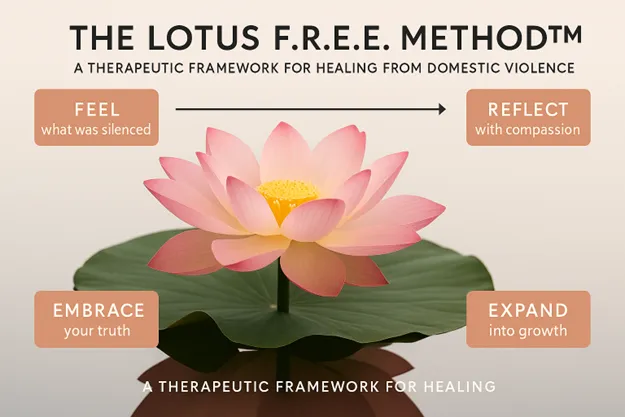
A Clear, Compassionate Path from Awareness to Healing
The Lotus F.R.E.E. Method™ is the therapeutic framework at the heart of Legacy of Healing. It offers a steady, evidence-informed rhythm for restoring safety, reclaiming identity, and building emotional stability after harm.
F — Feel What Was Silenced
Acknowledge emotions that were once hidden or suppressed.
Unfelt feelings settle in the body; naming them begins releasing shame and internal tension.
R — Reflect With Compassion
Look back without self-blame.
Reflection helps you understand where patterns began and separate who you are from what happened.
E — Embrace Your Truth
Release false labels and rebuild your sense of worth.
This step anchors new, healthier internal messages that support safety and dignity.
E — Expand Into Growth
Turn insight into small, steady choices.
Expansion teaches the nervous system that the danger has passed and that growth is possible.
The Lotus F.R.E.E. Method™ provides a consistent, structured pathway you can return to anytime healing asks for deeper work.
How to Use This Hub
Clear guidance for navigating the tools and resources.
The Resource Hub is designed to help you find what you need without feeling lost. Each section highlights tools that support learning, insight, and practical skill-building.
Use this Hub as a companion while exploring specific topics, completing workbook exercises, or helping someone else. There’s no set order. Simply choose what fits your current needs. Every resource can be revisited anytime to reinforce a sense of direction and stability.
Every Journey Begins Somewhere
One intentional step is enough.
Healing doesn't happen all at once. It grows through small, intentional choices made over time.
You don't have to explore everything today. Begin with the resource that speaks to where you are now, and return whenever you're ready for the next step.
Whether you're planting seeds for a child, sowing healthier patterns into your own life, or supporting someone else's journey, every step forward has the potential to become part of a lasting legacy.
Every meaningful legacy begins with one intentional step.
BEFORE YOU GO
A Resource to Take With You
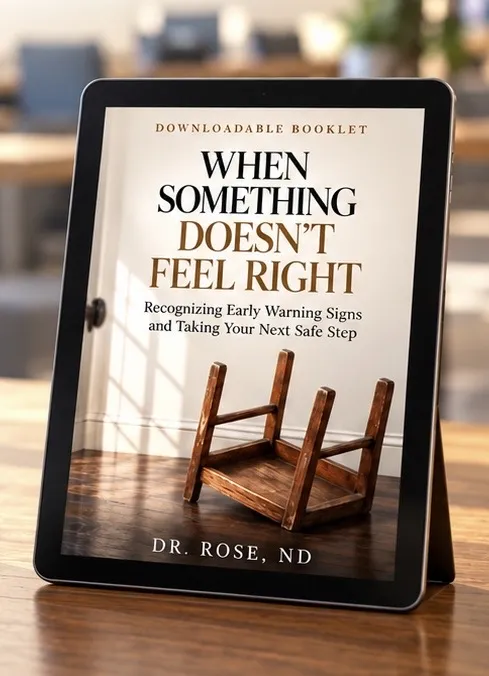
When Something Doesn’t Feel Right
Recognizing Early Warning Signs and Taking Your Next Safe Step
You’ve taken time to explore the Resource Hub. Before you go, we’d like you to take something with you.
When Something Doesn’t Feel Right is a complimentary digital resource created for those who sense that something in a relationship may not be right, even when they are not yet sure what to call it.
It offers a calm place to notice patterns, consider their impact, and think about what safety may mean for you, without pressure to label your experience or make a decision before you are ready.
Our gift to you. No purchase required.
A Legacy of Breaking Cycles & Restoring Lives.
There is quiet strength in choosing safety over spectacle, clarity over confusion, and respect over pressure.
QUICK LINKS


Educational Initiative | Trauma-Informed Resources | Functional Wellness Solutions | Global Awareness
© 2026 Dr. Rose ND, LLC. All rights reserved.
Legacy of Healing Global™ is the parent brand, and Legacy of Healing Global Institute™ is its nonprofit educational initiative. Both are operated by Dr. Rose ND, LLC.
The content, materials, publications, wellness formulations, system designs, and resources featured on this site, including but not limited to books, workbooks, educational materials, graphics, text, audio, and visual media. They are the intellectual property of Dr. Rose ND, LLC and are published and distributed through Legacy of Healing Global. All such materials are protected under applicable copyright and intellectual property laws.
___________________________________________________________________
Legacy of Healing Global™, Legacy of Healing Global Institute™, Lotus F.R.E.E.™, SurThrivor™, Mindset Reframe™, and all related titles, systems, formulations, frameworks, and logos are trademarks or proprietary assets of Dr. Rose ND, LLC. Unauthorized use, reproduction, or imitation of these materials is strictly prohibited.
The Lotus F.R.E.E. Method™, Legacy of Healing frameworks, structured system designs, and associated training materials are proprietary intellectual property of Dr. Rose ND, LLC and may not be reproduced, adapted, or distributed without written permission.
Materials published through Legacy of Healing Global may be referenced for educational or research purposes with proper citation but may not be reproduced, redistributed, or used commercially without written authorization.